About
A curved-bottom plane is indispensable for backing out a boat plank, curving a recess in a bench seat to make it more comfortable, or shaping concave pieces on furniture. A flat-bottom plane is perfect for smoothing boards perfectly flat, and when you make the plane body from wood, you can customize the shape to fit you hand.
A tuned wooden hand plane works as well as a premium metal plane and is soft on the hand. James Krenov (1920-2009) is widely regarded as one of the most influential woodworkers of the 20th century. He inspired a generation of woodworkers to create details with hand tools and he himself used wooden-body planes to do all sorts of smoothing tasks, including the interiors of the curved doors he often included in his cabinets.
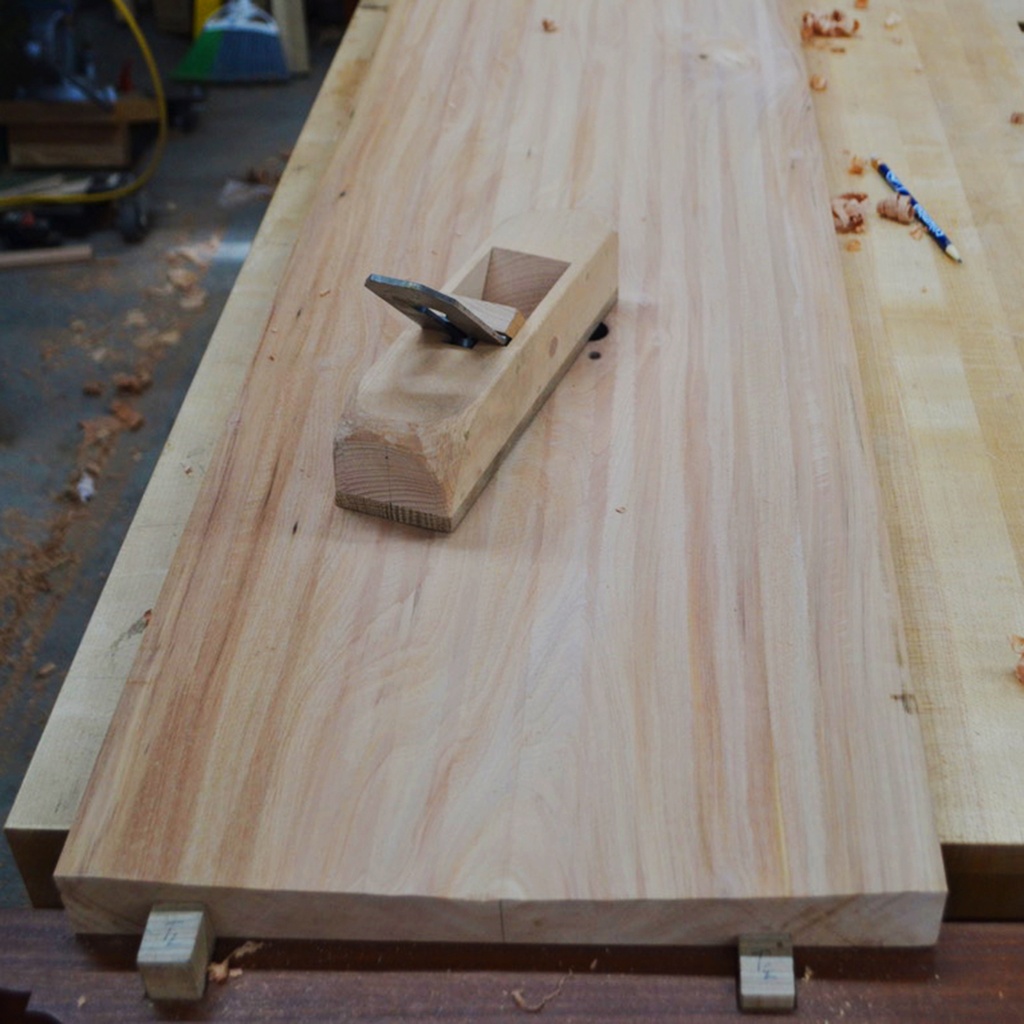
Your instructor for this class used a curved-bottom plane he made to shape the gentle trough on the top of a madrone bench shown under construction in the photograph.
Details
- Day 1: Lay out the plane body, bore for the throat wedge and locator dowels, resaw the blank, cut out the throat and frog bed, flatten the frog bed, and cut a groove for the chip-breaker screw. Glue up the plane body.
- Day 2: Clean up the plane body, shape its form to fit your hand, and make and fit a wedge to the chip breaker. Form the sole into a curve, if you wish. Adjust the throat to fit the iron, and grind, sharpen, and hone the blade. Use your plane to smooth some wood. Learn how to adjust the depth of cut.
- By the end of the class, you should know how to make additional planes if you want custom sizes or sole shapes.
Details
A $120 materials fee, included in the class fee, covers oak and maple for the plane bodies, a premium two-inch-wide plane iron with a breaker, and shop supplies.