About
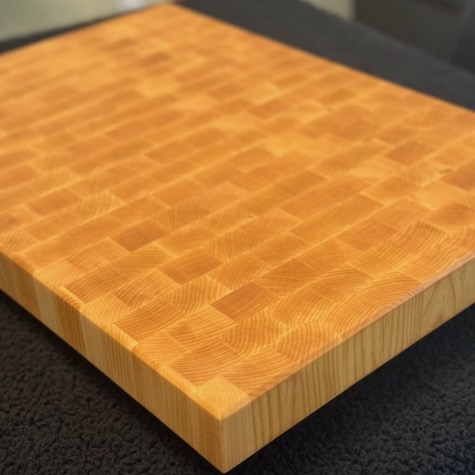
The traditional style for making butcher shop cutting boards calls for using short pieces of wood tipped upright and glued together so that the end grain becomes the cutting surface. Besides having a distinctive look dominated by annual growth rings that develop as the wood forms, this style better resists damage from knife blades. Often called chopping blocks, they differ from many cutting boards, which are wooden strips glued together along their long edges so the wood grain runs the length of the board.
You'll begin with a brief overview of the types of wood
typically used for cutting boards and the styles of end-grain cutting
boards that can be made. With guidance, you'll then mill lumber in
various stages of roughness to the smooth, straight, and square-edge
pieces you need. You'll learn proper techniques
for gluing and clamping, trimming to final size, sanding, and applying the final finish.
You'll walk away with a wonderful piece for your own kitchen or a gift, and having gained confidence with tools including the jointer, planer, miter saw, and table saw. You'll get plenty of experience simply because so many parts are involved. Whether you're relatively new to woodworking or experienced with power
tools, you’ll find making a cutting board to be fun and a great way to
gain more experience.
Details
A $40 materials fee, included in the class cost, covers everything you need.
Project
Your cutting board, made from a single type of hardwood, will be about 10 inches by 18 inches, and and 1 1/2 inches thick (precise dimensions will depend on your design choices).