About
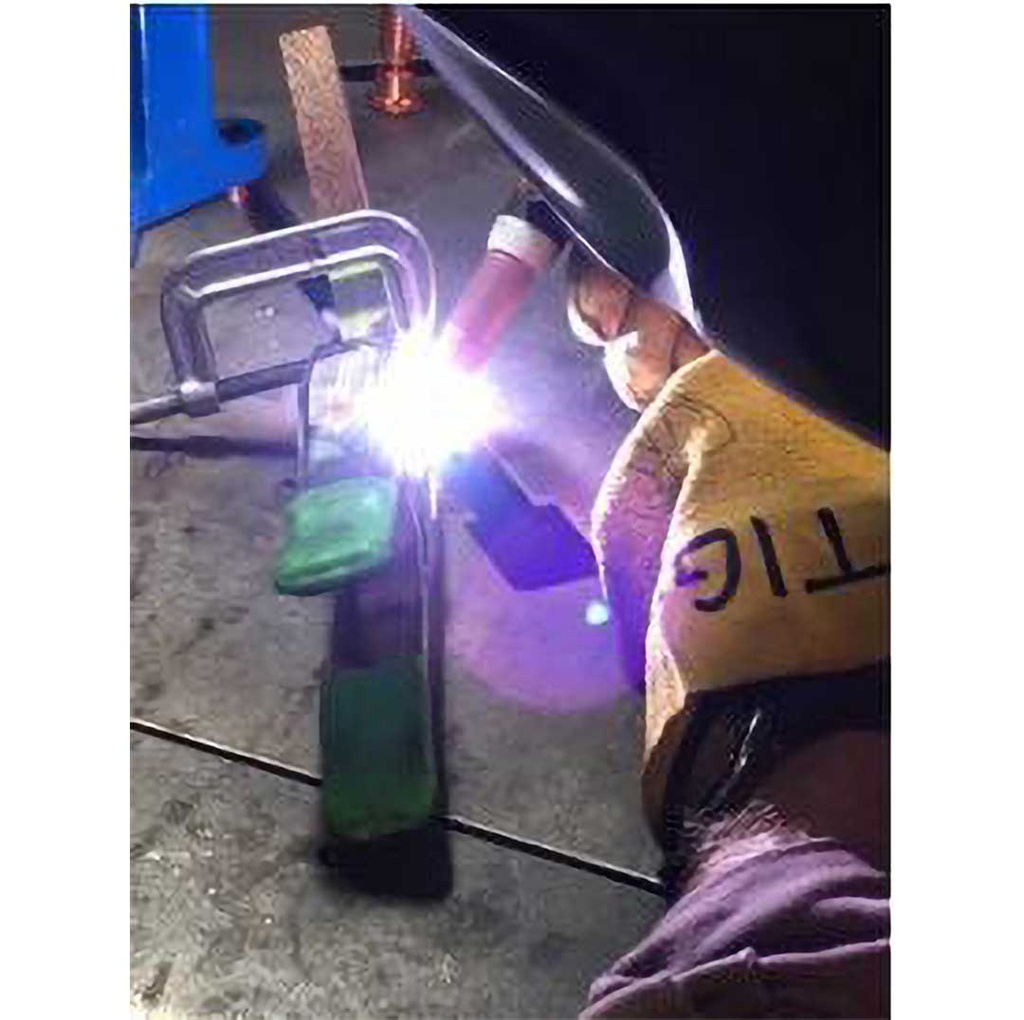
TIG welding is generally recognized as the welding technique of choice for artisans and more exotic materials including aluminum and stainless steel. TIG welding is more difficult to learn than MIG welding. TIG requires greater hand/eye coordination. TIG welding is a lower amperage precision arc welding process particularly useful in high grade artwork and metal sculpture.
TIG welding is generally recognized as the welding technique of choice for high quality artisans and more exotic materials including aluminum and stainless steel. TIG is more demanding technically than MIG. TIG require the simultaneous use of both hands and one foot (controlling the amperage pedal.)
This hands-on introduction is the first of a four-part series. Class size is 4 people facilitating one-on-one learning and direct mentoring. Each participant will have the use of a fully equipped TIG welding station.
The objective of the TIG series is for you to be able to comfortably weld using the TIG process.
The class includes shop safety and hazard awareness and proper use of Personal Protection Equipment. There is a brief introduction to welding theory and proper preparation of materials. Each student will go through the set up process for TIG welding on a Miller 215 Welder.
There will be approximately three hours of hands-on instruction in making a weld, different types of welds, and torch and filler rod manipulation.
At the end of the initial class, students should be able to lay down a good weld bead.
Details:
- The class includes shop safety and hazard awareness and proper use of Personal Protection Equipment. There is a brief introduction to welding theory, proper preparation of materials, set up process for TIG welding on a Miller 215 welder.
- Additional materials fee of $15 for steel coupons, gas, tungsten, consumables, and filler rod will be added to your total when you register for class.
- BARN will provide Personal Protection Equipment (PPE)
- Participants must wear a long sleeve shirt and long pants in natural fiber and closed toe shoes (preferably leather or cotton). Stretch fabrics are prohibited.
Instructor: Dave Roe. Dave is an amateur welder and a principal in the Metal Fabrication group at BARN. He is a Board Member at BARN.